Aviation Industry Mega-Merger Speculation Raises Antitrust Concerns and Market Questions
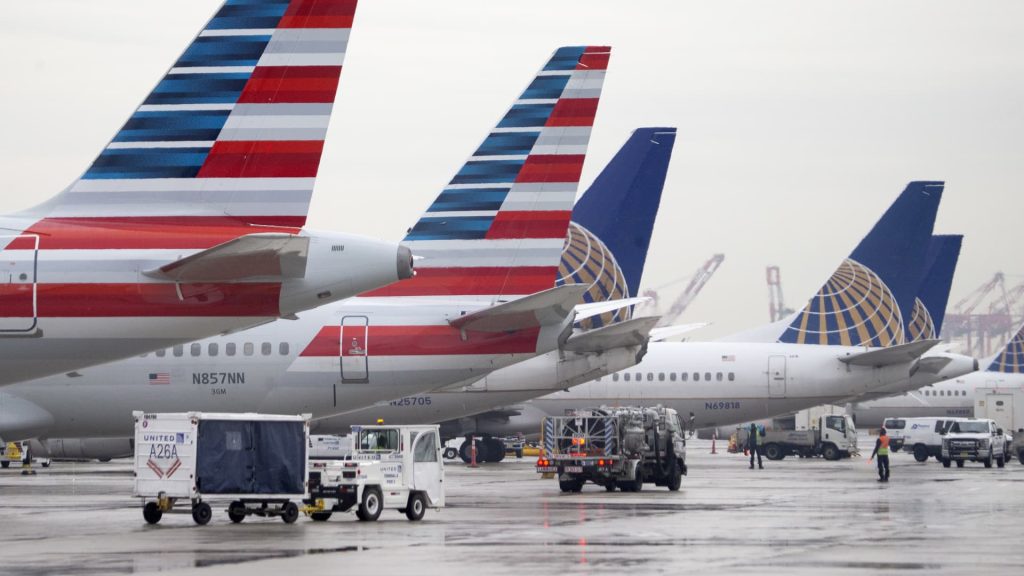
The aviation industry is buzzing with speculation about potential consolidation following reports that major airline executives have been discussing the possibility of creating what would become the world’s largest carrier through a merger of two major domestic airlines.
In my view, this kind of mega-merger represents exactly what’s wrong with corporate consolidation in essential industries. When you already have four carriers controlling roughly 80% of domestic flight capacity, combining two of the largest players would create a behemoth with approximately 40% market share – a level of concentration that should alarm anyone who cares about competitive pricing and consumer choice.
Legal experts are rightfully skeptical about such a deal’s prospects. As Cornell University law professor George Hay bluntly stated, this would be unprecedented in scale, making court approval extremely unlikely. I couldn’t agree more – the sheer audacity of proposing such consolidation in an already concentrated market demonstrates how disconnected airline executives have become from the reality of competitive markets.
The market reaction tells an interesting story. While shares of one potential merger partner jumped 9% following the reports, analysts attributed this more to short covering than genuine belief in the deal’s viability. Seaport Research Partners’ Daniel McKenzie characterized the proposal as “dead on arrival,” predicting it would face overwhelming public opposition once scrutinized.
What’s particularly concerning is how this merger fever reflects the current political climate’s apparent openness to mega-deals. The new Transportation Secretary has publicly expressed support for aviation industry consolidation, suggesting the administration “loves to see big deals happen.” This attitude fundamentally misunderstands what consumers need from the airline industry.
For frequent business travelers and those in hub cities dominated by these carriers, further consolidation would likely mean higher fares and reduced service options. The consulting firm ICF’s Samuel Engel correctly identifies the core issue: consolidation allows carriers to control capacity more effectively, which inevitably drives up prices. This isn’t theoretical – it’s basic economics.
The practical challenges alone should kill this idea. Industry analysts estimate that 289 routes would require significant divestitures due to competitive concerns, creating a regulatory nightmare that would take years to resolve. Who benefits from this uncertainty? Certainly not passengers or employees worried about job security during integration.
I find it telling that one of the rumored merger partners has struggled to compete effectively with its larger rivals, particularly in capturing high-spending customers who drive industry profits. Rather than fixing operational issues or improving customer service, the apparent solution is to eliminate competition through acquisition. This represents lazy corporate strategy at its worst.
The recent track record should give merger proponents pause. The previous administration successfully challenged multiple airline partnerships and acquisitions, with courts consistently ruling against deals that would reduce competition. A federal judge dismantled one major partnership in 2023, while another court blocked a planned acquisition that would have eliminated a budget carrier option for consumers.
What’s most frustrating is that some airline executives privately acknowledge the complexity and difficulty of mergers while publicly floating these ideas. As one CEO recently admitted, “Mergers are big and hard and complicated.” If that’s the case, why pursue them instead of focusing on organic growth and operational excellence?
This merger speculation ultimately serves no one except investment bankers and executives looking for quick fixes to competitive challenges. Consumers deserve better than an industry that solves problems through elimination of choice rather than innovation and improved service. The aviation sector needs more competition, not less, and regulators should reject any proposal that moves us further toward oligopoly control of essential transportation infrastructure.